
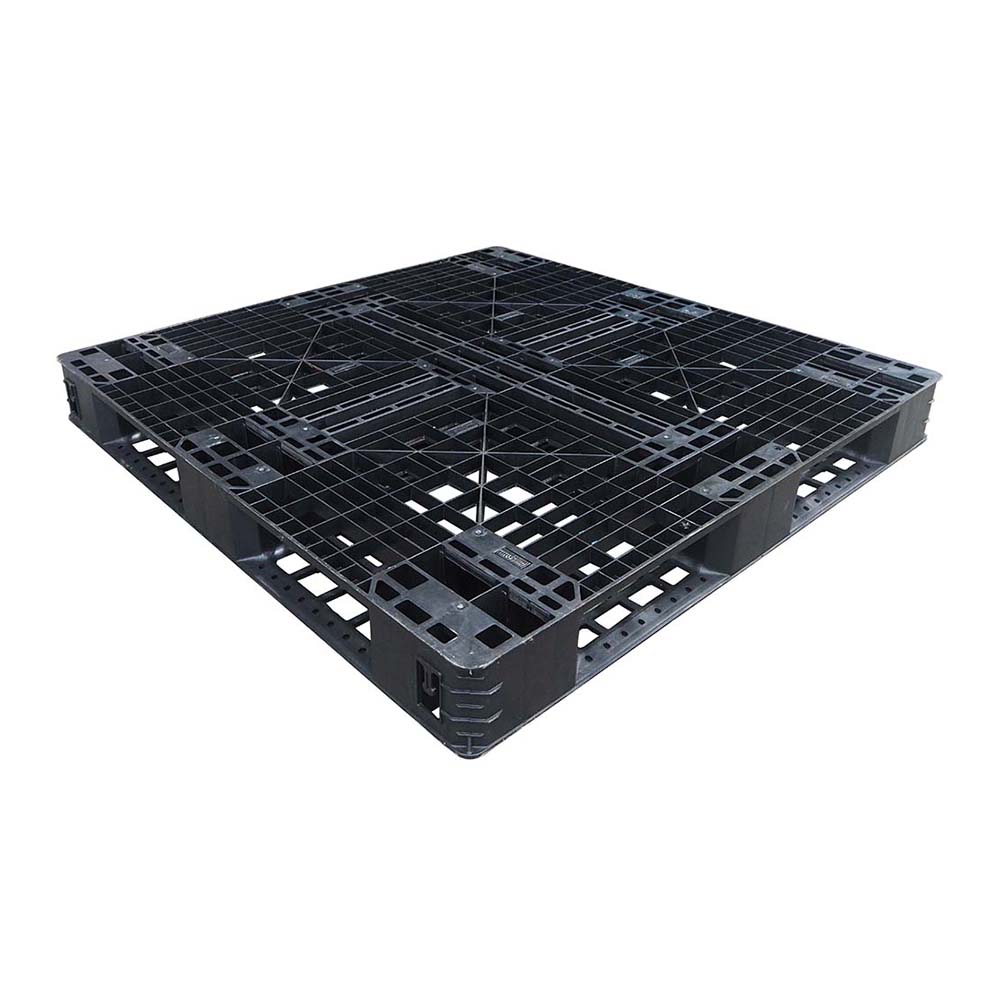
Not all plastic pallets are built for the same job. A nestable export pallet that cuts freight costs beautifully will fail quickly in drive-in racking, and a heavy duty rackable pallet is wasted money under a one-way air freight shipment. The right choice depends entirely on the application: what the pallet carries, how it is handled, and whether it comes back.
This guide walks through how to match plastic pallets to storage, transport and export applications, the selection factors that matter, and when plastic beats timber for WA businesses.
Why Businesses Choose Plastic Pallets
Plastic pallets offer a lightweight, reusable alternative to traditional timber, with a set of advantages that make them the default in certain applications:
- No fumigation or ISPM-15 treatment required. Plastic is exempt from the heat treatment rules that govern timber packaging in export trade, which removes a compliance step and the risk of quarantine holds over stamps and certificates.
- Dimensionally stable. Plastic pallets are moulded to consistent, uniform dimensions that do not warp, swell or shrink, which is exactly what automated warehouse systems and conveyor lines need to run without jams.
- Hygienic construction. Non-porous surfaces resist moisture, mould and bacteria, and are easy to clean and sterilise, making plastic the standard for food handling and pharmaceutical logistics.
- Long service life. Quality plastic pallets survive many more trips than timber in closed-loop systems, and can be recycled at end of life. Options in both new and recycled materials suit different operational and sustainability requirements.
- Safer handling. No splinters, nails or protruding fasteners, which improves manual handling safety outcomes in busy warehouses.
Match the Pallet to the Application
Start by defining the job, then let the application drive the specification:
Export Shipping
For one-way export and air freight, lightweight and nestable designs win. Lower pallet weight cuts freight charges on every consignment, nestable pallets reduce the space empty pallets consume, and consistent dimensions comply with air freight handling equipment. Because no ISPM-15 treatment is needed, plastic export pallets also remove quarantine paperwork from the equation entirely.
Warehouse Storage and Racking
Racking is the most demanding structural application a pallet faces, because the load is supported only at the edges. If pallets are going into beam or drive-in racking, specify rackable designs with the reinforcement and load ratings to match, and confirm the racking-specific rating rather than relying on the general capacity figure.
Food, Pharmaceutical and Hygiene-Critical Logistics
Hygiene applications call for smooth, closed-deck pallets that can be washed, steam cleaned or chemically sterilised, with no crevices to trap product or moisture. These designs are also well suited to cold storage environments where timber struggles.
Automated Systems and Closed-Loop Logistics
Automation rewards consistency. Uniform, dimensionally stable pallets keep conveyors, palletisers and AGVs running reliably. In closed-loop systems where pallets cycle between sites repeatedly, durable reusable designs deliver the lowest cost per trip even when the upfront price is higher than timber.
Five Specification Factors to Get Right
- Load ratings, in all three modes. A pallet carries different weights depending on whether it is sitting on the floor (static), on forklift tines (dynamic) or spanning racking beams (racking). Check all three against your heaviest realistic load, not just the headline figure.
- Deck style. Vented decks reduce weight and suit general freight and washdown drainage; smooth closed decks suit hygiene applications; anti-slip surfaces help keep unstrapped loads stable in transit.
- Nestable, stackable or rackable. Nestable pallets minimise return freight and empty storage space. Stackable and rackable designs trade some of that efficiency for structural performance. Choose based on where the pallet spends its life.
- Material: new or recycled. Recycled plastic pallets cost less and support sustainability targets, and suit most general logistics duties. Virgin material is typically specified where food contact or precise structural performance is required.
- Handling compatibility. Confirm fork entry points suit your forklifts and pallet jacks, and that dimensions match your racking, containers and automation. A pallet that fits the cargo but not the equipment still fails.
Plastic or Timber? A Quick Reality Check
Plastic is not automatically the right answer. Timber remains the more economical choice for many general freight and heavy industrial duties, is easier to repair, and custom wooden pallets can be built to exact cargo dimensions in ways moulded plastic cannot. The decision usually settles quickly against three questions: Does the application demand hygiene, automation compatibility or fumigation-free export? Plastic. Is the load heavy, oversized or irregular, and the budget tight? Timber. Will the pallet cycle repeatedly through a closed-loop system? Plastic usually wins on cost per trip.
For complete returnable logistics systems, plastic pallets also pair naturally with plastic crates and rigid and foldable bins, giving warehouses a consistent, washable, stackable handling family.
Let’s Build Your Solution
From remote mine sites to metropolitan warehouses, AXIS Industrial supplies plastic pallets across Perth and Western Australia in a wide range of sizes, load ratings and configurations, covering export shipping, racking systems, food handling, pharmaceutical logistics and automated warehouse operations, alongside the full timber pallet range for heavier industrial applications.
Not sure which pallet suits your operation? Take advantage of a free measure and quote. No obligation, no pressure. The AXIS team will assess your loads, handling equipment and logistics flow, then recommend the right pallet for the job.
Get a free measure and quote today at axisindustrial.com.au/contact or call +618 9353 1313 to chat with our experts.


